
钢铁侠3
党建领航促发展 夯实基础谱新篇——市中院上半年党建工作综_我的网站

一 | ■ 本报记者 宋雨航 今年上半年,市中院始终坚持党建引领、强化理论武装,强基固本、夯实基础,不断丰富党建工作内容、创新工作载体、激发党建工作活力,奋力开创新时代党建工作新局面。 建设到位 凝心铸魂筑牢根基 该院党组坚决落实党建工作主体责任,坚持“以党建带队建促审判”的工作思路,把党建工作和业务工作同安排、同部署、同督导、同落实,促进党建与业务工作深度融合。强化各党支部抓党建的责任意识、担当意识和自觉意识,把党建各项工作任务落实落细落到位,确保任务圆满完成,以高质量党建引领保障业务高质量发展。 突出政治统领,强化政治机关建设。院党组始终坚持把党的政治工作摆在首要位置,以党的政治建设为统领,围绕增强政治属性和政治功能,引导党员干部不断增强政治素养。

二 | 党组书记履行第一责任人责任,带头管阵地、把导向,班子成员按照“一岗双责”要求,扎实落实党建工作主体责任,形成齐抓共管、各负其责、协同推进的工作格局。

三 | 严格落实意识形态工作责任制,每季度召开一次研判会,每半年召开一次党组会专题研究意识形态工作,对本单位意识形态领域的风险隐患和倾向性苗头性问题进行分析研判,总结经验、查找不足、提出对策。
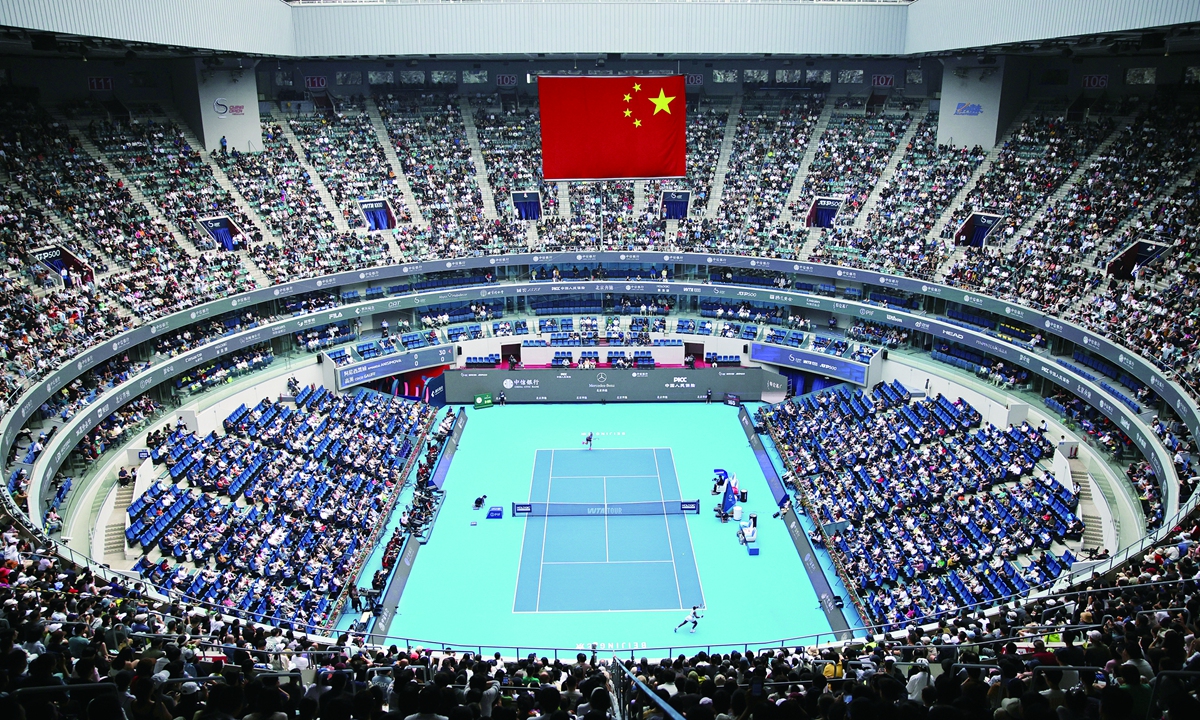
As international tennis tournaments multiply across China this autumn, organizers are increasingly looking beyond the court, seeking to turn a trip to a tournament into a broader travel experience.
The 2026 Chinese tennis season, starting in September, will bring a series of international events to cities including Chengdu, Hangzhou and Suzhou besides flagship events in Beijing and Shanghai.
The growing concentration of tournaments is giving Chinese cities a chance to connect sporting events with local consumption, cultural activities and tourism.
Shanghai offers perhaps the clearest example of how that strategy is developing.
In 2025, the Shanghai Masters attracted more than 250,000 spectators, with about 10 percent coming from overseas and 60 percent from outside Shanghai, according to the Shanghai municipal government. The tournament also generated more than 100 million yuan ($14.8 million) in ticket revenue.
The figures have encouraged organizers and city authorities to think beyond the traditional model of selling a ticket to a tennis match.
During this year's Shanghai Masters, ticket packages will include options combining matches with direct transportation, family experiences and visits to other Shanghai attractions, the organizers have announced.
The approach fits into Shanghai's broader effort to use major sporting events to attract international visitors.
The experience in Shanghai suggests that the relationship between tennis and tourism can work in both directions: a tournament brings people to a city, while the city gives spectators reasons to stay longer and spend money beyond the stadium.
For host cities, making tennis more than a sporting event can also serve as a platform for destination marketing, particularly when the event attracts an international audience.
Sports tourism can offer cities something that conventional sightseeing does not, according to tennis commentator Chen Chi.
"Tennis events can activate destinations and build recognizable identities," Chen told the Global Times. "The international player base and global fan following of tennis give host cities an audience well beyond their local audiences, which is widely seen at the Grand Slam events."
The challenge now is to make those visitors stay longer and explore more of the host city. That is where the "ticket plus" model comes in.
Rather than simply asking visitors to buy a match ticket, organizers are increasingly packaging the tournament with hotels, transportation, attractions and other experiences.

Culture matters
In Suzhou, East China's Jiangsu Province, organizers of the WTA 125 Suzhou Open are trying to connect the tournament with the city's existing cultural resources.
Zhou Yunsong, tournament director of the Suzhou Open, said the timing gives spectators an opportunity to combine a tennis trip with a holiday as it partially overlaps with the annual National Day holidays.
"For our spectators, this is a rare opportunity to combine watching tennis with travel. For domestic tennis fans, they don't have to take time off work as they normally would," Zhou told the Global Times.
The tournament venue, the Yangcheng Lake International Tennis Center, is located near several cultural and commercial areas in Suzhou.
The event has also introduced a hotel-and-tennis package, while organizers have arranged cultural experiences for players, including visits to Suzhou's gardens and local cultural venues.
"To give players an immersive experience of Suzhou's charm, we have planned a range of cultural activities, including visits to the Suzhou Museum, tasting authentic Suzhou cuisine, listening to Kunqu Opera, trying on traditional Chinese qipao and visiting embroidery workshops," Zhou noted.
Zhou sees a broader change in the way people plan trips.
"Traveling to sporting events is becoming a choice for more and more people," he said. "In the past, tourism was about sightseeing - going to a destination, taking photos and checking in. Now, especially among younger generations, people are more inclined to take themed trips."
The idea, he said, is to use the tournament as the starting point for a much wider city experience.
"We hope Suzhou can, with the professional tournament at its core, connect all of Suzhou's tourism resources, including its food, gardens, water towns and shopping, so that visitors can travel around the city for the sake of one match."
Players as ambassadors
For international tennis, this model has another potential advantage: The players themselves can become part of a city's tourism promotion.
Beijing, for instance, is bringing the players themselves into the tourism story. Li Xuhua, general manager of the China Open, said the tournament plans to give players more opportunities to experience the city.
Current world No.1 Jannik Sinner is among the players who are invited to participate in a hutong (traditional alleyway) tour during his stay in Beijing, Li told the Global Times.
The China Open is also expanding its off-site activities this year.
Li said the tournament will work with the local government to establish more match-watching venues in major commercial areas, allowing people to experience the tournament outside the main tennis center.
"The information from the tennis court can go out and reach people around the city," Li said.
For organizers such as Li, the goal is to make the tournament a broader part of the city's cultural and public life.
"We want this rare tennis carnival to be richer and more colorful, and to give fans more time to experience the appeal of tennis," Li said.
The emerging model is still at an early stage as different event organizers are exploring their own strategies. But the direction is becoming clearer: Tournaments are being used not only to fill seats in stadiums, but also to promote cities as travel destinations.
。上半年,党组研究部署党建工作2次,开展研究意识形态工作2次、谈心谈话1次。 坚持凝心铸魂,持续加强理论武装。认真组织全院干警开展政治理论学习,宣传党的各项方针政策。

四 | 围绕“抓党建带队伍促审判树一流”的工作思路,严格落实党组会议“第一议题”制度。上半年,院党组理论学习中心组集体学习7次。 学习到位 党纪教育走深走实 从4月份开始,该院深入开展党纪学习教育工作。制定了《党纪学习教育应知应会知识点》等学习材料。按照上级文件要求,4月25日、5月29日,按期召开两期党纪学习教育读书班。

五 | 5月11日,组织全体干警集中观看警示教育片《持续发力·纵深推进》,深入推进党纪学习教育走深走实,引导广大干警知纪守纪,提高拒腐防变能力。6月12日,组织观看《警钟为你长鸣——严明党的纪律》《激浊扬清 筑牢公平正义根基》警示教育片,引导广大干警进一步增强严守纪律的自觉性与坚定性,筑牢纪律底线。 该院把严明党的政治纪律和政治规矩摆在突出位置,严肃执纪问责,坚持党性党风党纪一起抓,持续在主动发现问题、及早处置问题、严格防范问题上下功夫,推动防范风险和治理腐败问题常态化长效化。上半年,共组织警示教育4次,450人次接受教育。

六 | 3月28日,全市法院党风廉政建设和反腐败工作会议召开。

七 | 会议全面贯彻落实中央纪委、省纪委、市纪委会议精神,总结2023年全市法院党风廉政建设和反腐败工作,部署2024年工作任务。为贯彻落实此次会议精神,该院制定了《市中级人民法院党组2024年度落实全面从严治党主体责任清单》和《关于贯彻落实全市法院党风廉政建设会议精神的工作方案》。 在春节、五一节点,该院进行领导班子集体廉政谈话和中层干部集体廉政谈话,共计开展廉政谈话27人次。

八 | 5月7日,召开全市法院新任职干部任前集体谈话会。上半年,市中院对基层法院开展实地审务督察和智能审务督察共13次,对审务督察发现问题较多的法院进行整改约谈,压紧压实工作责任,以高标准、严要求抓整改落实,以精细化检查改进司法作风,以规范司法服务促进群众满意度提升。 落实到位 强基固本推动发展 该院着力建强基层党组织,持续加强党支部标准化规范化建设,积极推动模范机关建设,打造“五星”党支部,着力在创新形式、丰富内涵、确保实效上下功夫,不断增强党内政治生活的政治性、时代性、原则性、战斗性。 为进一步优化组织设置,提升党组织的战斗力和凝聚力,该法院把12个党支部优化调整为18个党支部,并完成支部选举,优化了组织结构,调整党支部设置。

九 | 严格落实“三会一课”组织制度,积极开展多样化主题党日活动。3月4日,在连山区沙河营乡敬老院开展敬老爱老主题党日活动,党员干警为敬老院的老人们理发、包饺子并表演了精彩的节目;4月3日,组织党员干警前往辽沈战役纪念馆开展“传承先烈精神 奋进伟大征程”清明祭英烈主题党日活动,回顾东北解放战争历史和辽沈战役胜利进程,进一步了解中国共产党波澜壮阔的革命历史。

十 | 该院紧扣工作实际,积极探索新形式下工、青、妇工作方法,在春节期间开展了迎新春趣味活动,并走访慰问罹患大病困难职工;正月十五,举办喜迎元宵佳节猜灯谜活动;为纪念“国际劳动妇女节”和“女法官国际日”,开展“柔肩担重任 巾帼显担当”主题活动,集体观看了电影《第二十条》;5月,组织干警开展了以“青春有梦 勇攀高峰”为主题的“五四”青年节登山活动;参加市总工会举办的全市职工“文化当继承 经典咏流传”主题阅读活动,获得二等奖;6月,开展了以“‘未’你而来 法伴成长”为主题的系列普法活动,组织干警积极报名参加市直机关举办的“优秀传统文化暨八段锦、太极拳(太极扇)进机关”活动等。精彩纷呈的活动不仅展现了干警的风采,更进一步教育和激励了广大党员干部的爱党爱国热情,锤炼了党性修养。 浩渺行无极,扬帆但信风。

十一 | 加强和改进法院党的建设工作永远在路上。市中院将深入贯彻落实新时代党的建设总要求,振奋精神、真抓实干,只争朝夕、不负韶华,奋力推动新时代人民法院党建工作再上新台阶。
Current article:http://gmv0v.pisezuibanzoukou.cyou/0vvep/20260826/8252.html
Published on:13:26:18